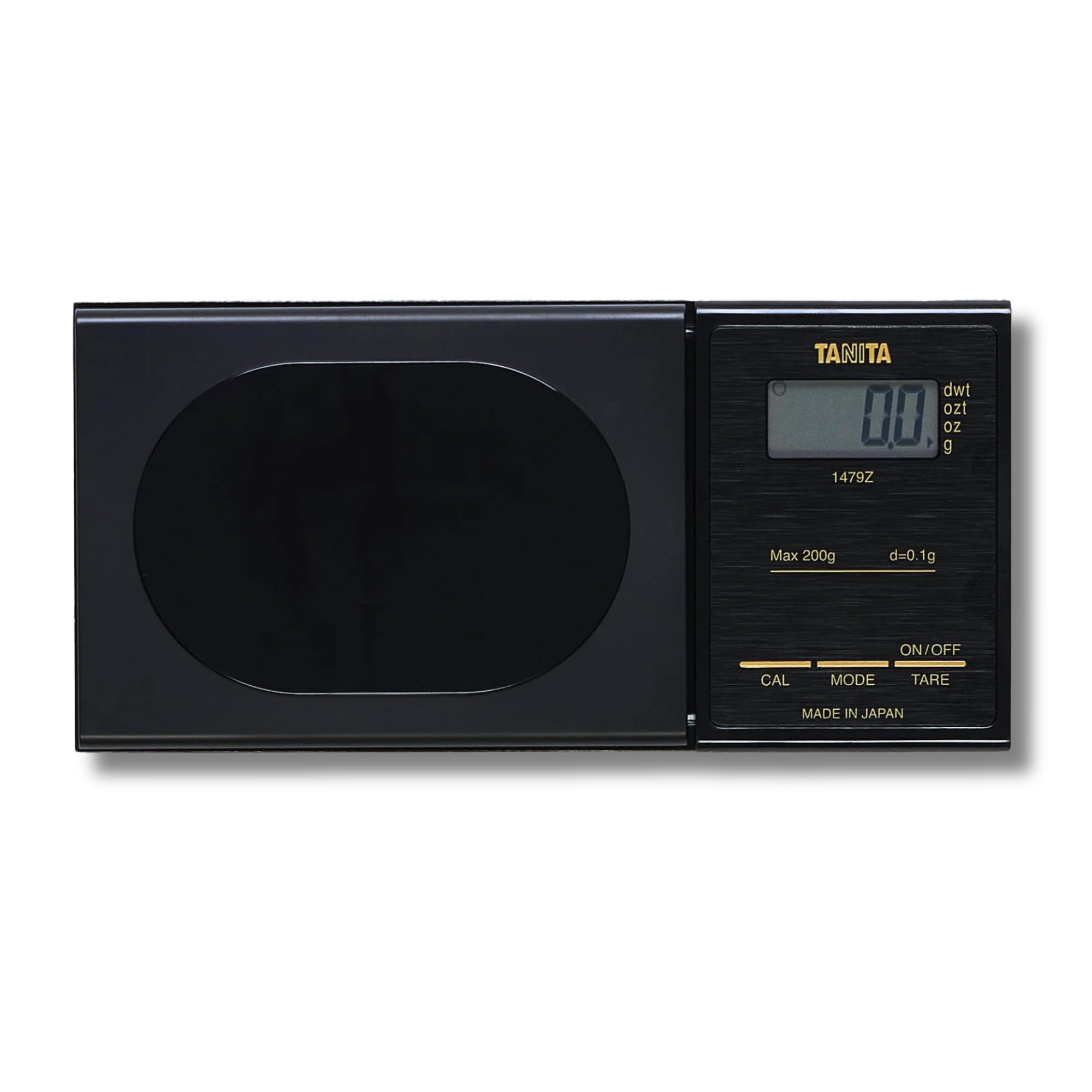
Tanita 1479Z Digital Milligram Scale Review: A Japanese Precision Tool for Coffee, Jewelry, and Cooking
The Tanita 1479Z is a digital milligram scale that positions itself as a precise tool for a variety of tasks—from weighing coffee beans and baking ingredients to testing gold and tracking nutritional portions. It comes from a brand known for its Japanese engineering, which immediately sets certain expectations around accuracy and build quality. After spending some time using it in everyday scenarios, I have a clearer picture of where it shines and where it falls short.
In real-world use, the scale handles small measurements well. For coffee enthusiasts who weigh their beans before grinding, the 1479Z responds quickly and shows readings in 0.001 gram increments up to 50 grams. It can also switch to ounces, troy ounces, and other units, which is handy for jewelry or precious metal testing. The platform is large enough to hold a small bowl or a coffee cup, though it is not suited for heavy loads—the capacity maxes out at 50 grams, so this is strictly for lightweight items.
Key features include a tare function, an auto-off timer, and a backlit display that is readable in low light. The scale also has a “nutritional calculator” mode that lets you input a serving size and then weigh portions to see calorie or macro estimates. This is a clever addition, but in practice, it requires manually entering data for each food item, which can be tedious. The memory function stores recent weighings, which is useful for tracking multiple ingredients in a recipe.
One limitation worth noting is the calibration process. The scale does not come with a calibration weight, so you will need to purchase one separately if you want to verify accuracy over time. While the Tanita 1479Z is generally consistent out of the box, I noticed slight drift after several weeks of use—nothing major, but enough to make me wish it included a calibration weight. Also, the plastic construction, while lightweight for travel, does not feel as robust as some metal-bodied alternatives. It is fine for home use but may not survive a drop on a hard floor.
Compared to a typical pocket scale like the AWS-100 or a budget-friendly model from Smart Weigh, the Tanita 1479Z offers better responsiveness and a more intuitive interface. However, those alternatives often include calibration weights and have slightly higher weight capacities (e.g., 100 or 200 grams). If you regularly need to weigh items over 50 grams, this scale will not work for you. For its intended range, though, the 1479Z is reliable and easy to read.
Who is this scale for? It suits home baristas who want precise coffee dosing, bakers measuring small amounts of leavening agents, or hobbyists testing gold or gemstones. It is also a decent choice for travelers who need a compact scale for portion control. On the other hand, it is not ideal for commercial use, heavy-duty kitchen tasks (like weighing flour in bulk), or anyone who wants a scale with a built-in calibration weight. The nutritional calculator feature feels more like a gimmick than a practical tool for most users; a simple food scale with a nutrient database app on your phone would be more efficient.
Overall, the Tanita 1479Z delivers on its promise of milligram precision from a reputable Japanese brand, but it has quirks that keep it from being a universal recommendation. If your needs align with its strengths—small weights, portability, and fast readings—it is a solid choice. Just be prepared to manage calibration yourself and handle it with care to maintain accuracy.