15×55 UHD Binoculars with Phone Adapter: A Closer Look at This High-Powered Option for Outdoor Use
Binoculars with high magnification like the 15×55 UHD model often promise a lot, but delivering on that promise in real-world conditions is another matter. I spent several weeks using this blue pair for bird watching, a coastal cruise, and some casual stargazing. Here’s how they actually performed.
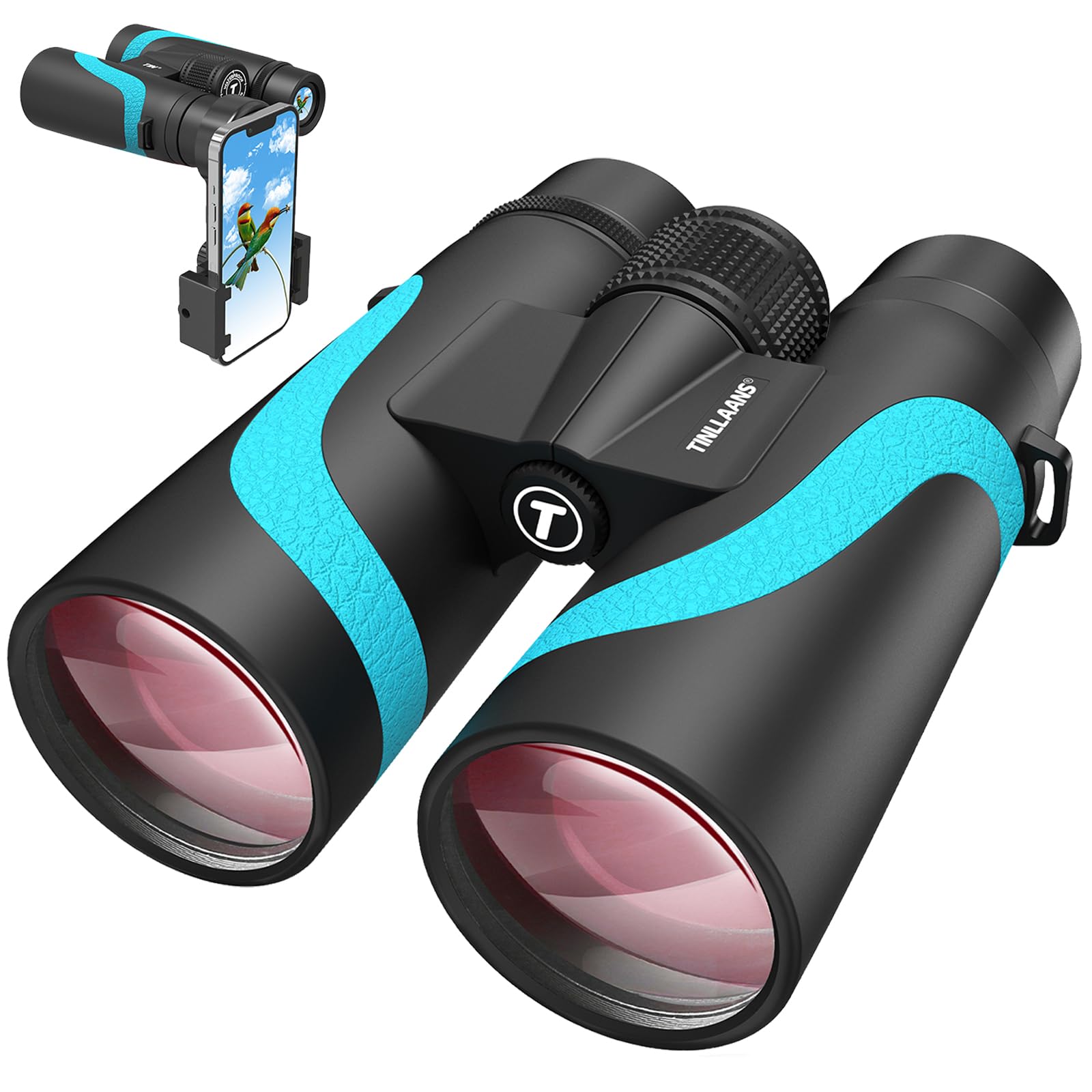
The most immediate thing you notice is the magnification. At 15x, distant objects really do jump into view. I could clearly see the markings on a heron nearly 200 yards away, and during the cruise, I picked out buoy numbers and distant shore details that would have been blurry with standard 8x or 10x binoculars. The 55mm objective lenses gather plenty of light, so in overcast morning light, the image remained bright without feeling washed out. The BAK4 prisms and what the manufacturer calls UHD optics produce a sharp, color-accurate image across most of the field of view. There is some slight softness at the very edges, but that’s typical for this price range and magnification.
Where these binoculars have a clear advantage is in their included phone adapter. It’s a universal clamp that attaches to one eyepiece and holds your phone’s camera over the lens. It’s not as seamless as a dedicated spotting scope setup, but it works reasonably well for quick photos. I managed to capture a few decent shots of a hawk perched on a branch, though aligning the phone perfectly takes a bit of patience. The adapter is a genuine plus for anyone who wants to share what they see without buying extra gear.
However, this high magnification comes with trade-offs. The biggest is stability. Handholding a 15x binocular is challenging. Even slight hand tremors become very noticeable, making the image shake. I found that leaning against a tree or using a car window as a brace helped, but for extended viewing, a tripod is almost essential. The binoculars have a tripod adapter socket built into the center hinge, which is a good design choice, but you’ll need to buy a separate tripod and adapter. Also, the field of view is narrower than lower-power models. Scanning for birds in dense woods felt a bit like looking through a straw. For open fields or water, it’s fine, but for close-quarters forest watching, an 8x or 10x pair would be far more practical.
In terms of build quality, the body is wrapped in a rubber armor that feels durable and provides good grip, even in damp conditions. They are advertised as waterproof and fog-proof, and after leaving them out in a light drizzle for an hour, there was no internal fogging. The focus wheel is smooth but a bit stiff, which is actually helpful for making fine adjustments at high magnification. The weight, around 32 ounces, is manageable for short hikes but becomes noticeable after an hour of carrying them around your neck.
Compared to a typical 10×42 binocular, which is more common for general birding, these 15x55s offer significantly more reach but at the cost of portability and ease of use. A 10×42 is easier to hold steady, has a wider field of view, and is lighter. For someone who primarily watches birds in open habitats like marshes or shorelines, the extra magnification of these 15x55s is a real benefit. For a hiker who wants one pair for everything from forest trails to mountain vistas, a 10x or even a compact 8x would be a more versatile choice.
Who these are for: Birders who spend time in open areas, wildlife watchers who want to see details at long distances, and photographers who want a simple way to capture digiscoped images without a dedicated camera setup.
Who should look elsewhere: Hikers who prioritize lightweight gear, anyone who needs to scan quickly in dense woods, or viewers who dislike using a tripod or support. If you have shaky hands, these will frustrate you without a tripod.
Overall, the 15×55 UHD binoculars deliver on their core promise of high magnification and decent image quality. The phone adapter is a useful bonus, but the need for steady support and the narrow field of view are real limitations. They are a niche tool that works well for specific scenarios, but they are not a universal replacement for a standard mid-power binocular.