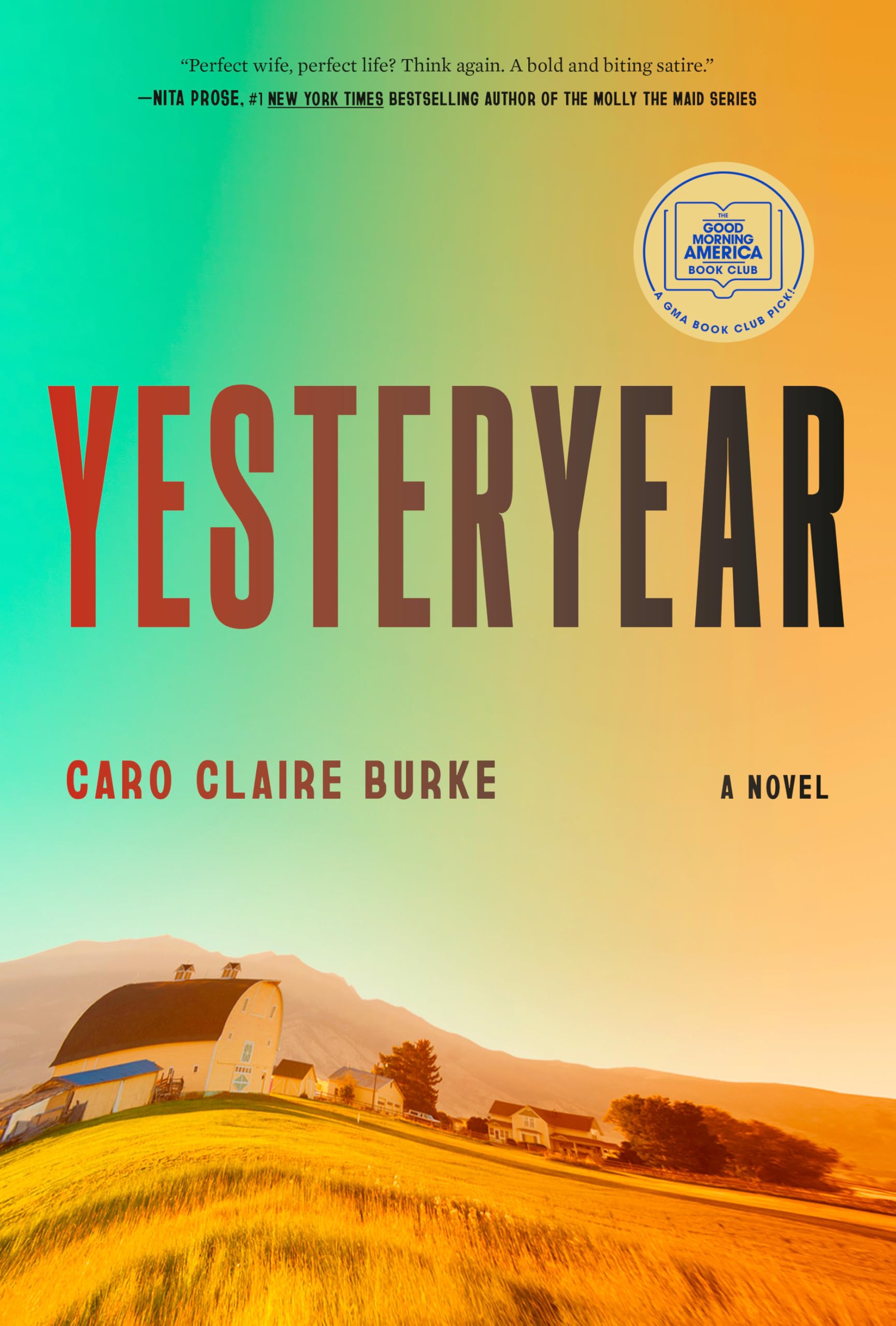
Yesteryear: A GMA Book Club Pick – A Novel That Blends Nostalgia with Unease
Yesteryear, a novel selected for the Good Morning America Book Club, is one of those books that you might pick up expecting a straightforward, feel-good story about the past. Instead, it offers something a bit more layered—and occasionally unsettling. The narrative centers on a protagonist who returns to their small hometown, only to find that the cherished memories of youth are fraying at the edges. It’s a setup that could easily veer into sentimental cliché, but the author manages to keep things grounded by focusing on the small, often overlooked details of daily life.
In real-world usage, this is the kind of novel you’d likely read over a weekend, perhaps on a quiet afternoon or while commuting. The pacing is deliberately slow, which can be a double-edged sword. For readers who enjoy immersing themselves in atmosphere and character introspection, it works well. The prose is descriptive without being overwrought, and the dialogue feels natural—people talk around their feelings rather than stating them outright. However, if you prefer plot-driven stories with frequent twists, you might find the book’s rhythm too languid.
Key functional features of the novel include its character-driven structure, where the emotional arcs of the main and supporting characters are given more weight than the external events. The sense of place is another strong point: the small town feels lived-in, with its diners, overgrown lots, and quiet streets. The author also employs non-linear storytelling, weaving flashbacks into the present narrative. This technique can be effective for revealing backstory, but it sometimes disrupts the flow, and a few transitions feel abrupt. There’s also a mystery element involving a long-buried secret, but it’s handled subtly—don’t expect a thriller’s pace or resolution.
One limitation worth noting is the emotional distance that can creep in. While the protagonist’s internal conflicts are well-drawn, the novel occasionally holds the reader at arm’s length, making it hard to fully invest in the stakes. The ending, too, is ambiguous, which may frustrate those looking for closure. Compared to a more conventional family drama or mystery novel, Yesteryear feels more like a literary meditation on memory and loss. It shares DNA with works like The Storied Life of A.J. Fikry in its focus on human connection, but it lacks that book’s warmth and humor. It’s closer in tone to something like Olive Kitteridge, but without the sharp, episodic structure.
This novel is suitable for readers who enjoy introspective, character-focused fiction and are willing to sit with ambiguity. It’s a good pick if you’re in the mood for a quiet, reflective read that doesn’t tie up every loose end neatly. On the other hand, it is not suitable for those who prefer fast-paced plots, clear resolutions, or light, escapist fare. The melancholy undertone might also be a turn-off if you’re looking for something uplifting. In short, Yesteryear is a competent, sometimes moving novel that earns its Book Club designation through its discussable themes, but it doesn’t break new ground. It’s a solid, if not remarkable, addition to the genre of nostalgic fiction.