KingPavonini Wireless TENS Unit Review: A Portable Muscle Stimulator for Pain Relief with Dual Channels and Rechargeable Case
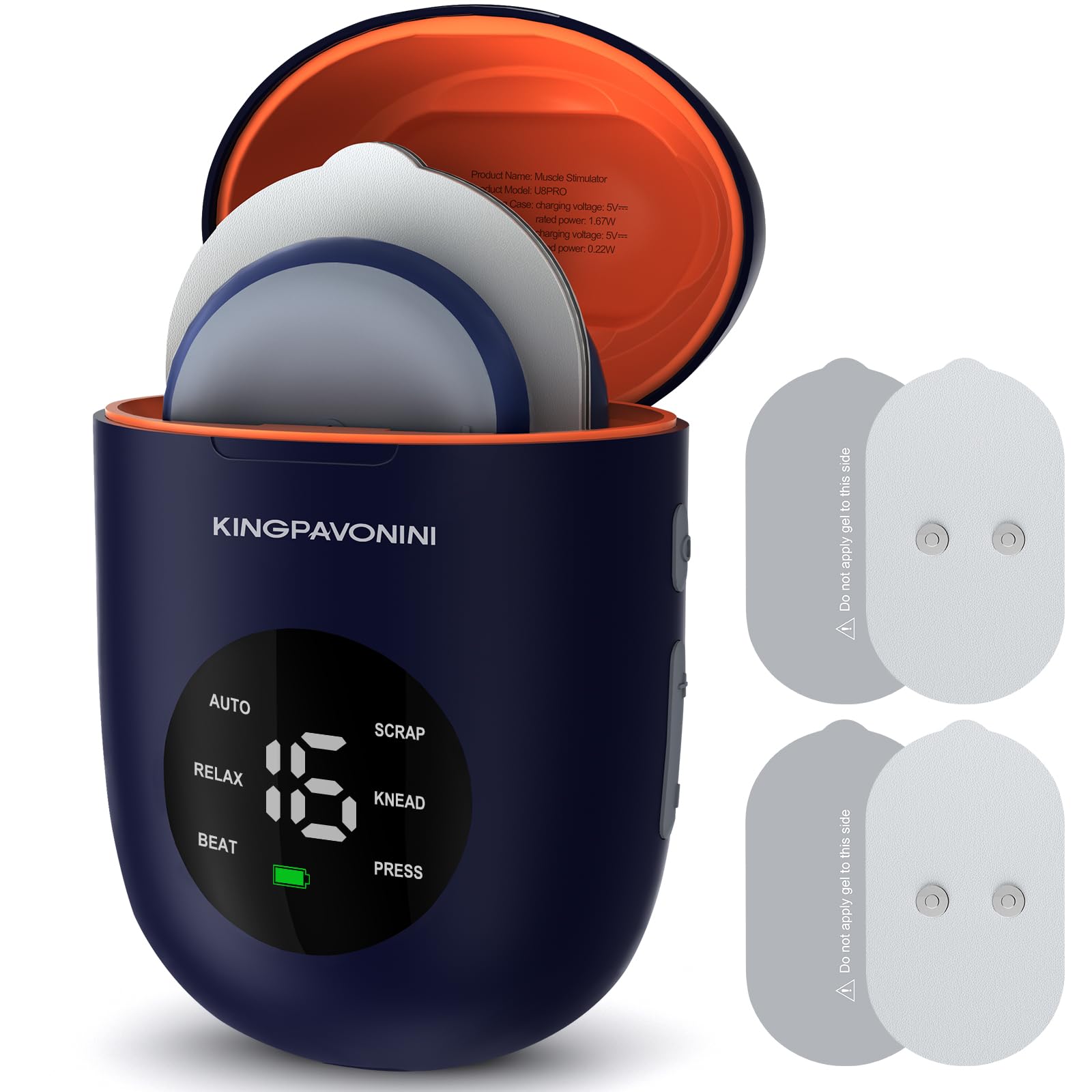
The KingPavonini Wireless TENS Unit is a portable muscle stimulator designed for pain relief, combining TENS and EMS therapy in a compact, rechargeable package. It comes with a charging case, remote control, and an LED screen, aiming to offer convenience for those managing muscle aches or recovery needs. After testing it over several weeks, here’s a balanced look at how it performs in real-world use.
This device is primarily used for targeted pain relief—think sore lower backs, tense shoulders, or post-workout leg muscles. The dual-channel design means you can treat two areas simultaneously, like both knees or your neck and lower back, which is practical for multitasking. The electrodes stick well to skin, though they lose adhesion after repeated use and require replacement (a common issue with most TENS units). The unit itself is lightweight and clips easily to a waistband or pocket, making it unobtrusive during daily activities like desk work or light walking.
Key functional features include six modes and 16 intensity levels. Modes range from classic TENS pulses for nerve-based pain relief to EMS settings for muscle stimulation and recovery. The LED screen shows the selected mode, battery level, and intensity, which is helpful for adjustments without guessing. The remote control works wirelessly from a few feet away, so you don’t have to fumble with the device mid-use. The charging case is a standout addition—it protects the unit and provides extra battery life, though it adds bulk to pocket carry. Battery life is decent: about 4-5 hours of continuous use per charge, with the case offering a few full recharges before needing its own power.
One limitation is the intensity scaling. The lower levels (1-4) are subtle, but the jump from level 8 to 10 can be abrupt, making it tricky to find a comfortable middle ground for sensitive areas. Also, the electrode pads are small (about 2×2 inches), which works for spots like wrists or ankles but feels less effective on larger muscles like quadriceps without using multiple pads. The remote, while handy, has a short range of about 10 feet and sometimes loses connection if you move behind a wall.
Compared to a traditional wired TENS unit like the Omron or TENS 7000, the KingPavonini offers more portability and less cord clutter, but it sacrifices some power consistency. Wired units often deliver stronger, more consistent pulses at higher intensities, especially for deep muscle pain. If you need robust clinical-level stimulation for chronic conditions, a wired model might be a better fit. However, for general soreness or on-the-go relief, the wireless design is a clear advantage.
Who it is suitable for: This unit works well for active individuals wanting post-exercise recovery, office workers with neck or back tension, or anyone needing occasional pain relief without being tethered to a wall outlet. It’s also good for beginners due to the straightforward controls and preset modes.
Who it is not suitable for: People with chronic, severe pain or those requiring high-intensity stimulation for deep tissue issues may find it underpowered. It’s also not ideal for users with larger body frames who need wide electrode coverage, or those who prefer a simpler, single-function device—the mode variety can feel overwhelming if you just want a basic pulse.
Overall, the KingPavonini TENS unit is a reasonable option for portable pain management, with the charging case and remote adding genuine convenience. Just keep expectations realistic: it’s a consumer-level device, not a medical-grade tool. The electrode longevity and intensity jump are notable downsides, but for its price range, it competes well with similar wireless stimulators on the market.